
Current Situation Analysis
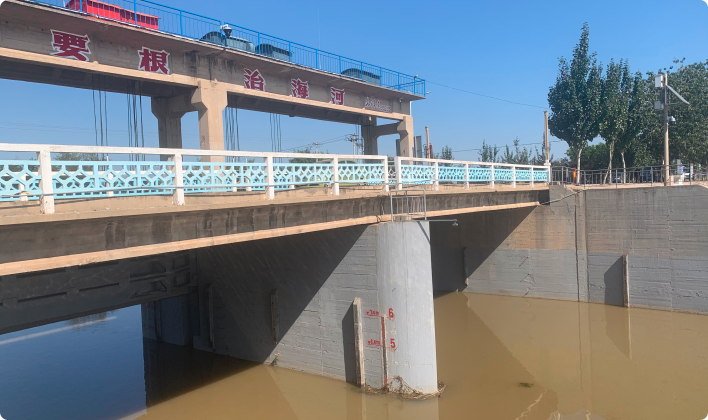
Gates regulate water levels, control discharge, allocate water, and manage flood control in irrigation districts. Traditional operations face several challenges:
This solution integrates sensing, auto-control, communication, and software systems to streamline gate operation, enable precise water delivery, and achieve unmanned site management.
Construction Standards
Water Resources Standards
- SL 27—2014 Specification for Construction of Sluices
- SL 75—2014 Technical Code for Maintenance and Management of Sluices
- SL 214—2015 Guidelines for Safety Evaluation of Water Sluices
- SL 226—1998 Standard for Scraping Hydraulic Metallic Structures
- SL 240—1999 Rating Standards for Equipment Management
- SL/T 381—2021 Specification for Manufacture, Installation and Acceptance of Hoists
- SL/T 426—2021 Technical Specifications for Water Flow Measuring Equipment
- SL/T 478—2021 General Principles for Data Structures & Identifiers
- SL/T 701—2021 General Principles for Water Information Classification & Coding
- SL/T 812.1—2021 Transmission Protocols for Water Monitoring Data
National Standards
- GB 50179-2015 Code for Open Channel Water Measurement
- GB 50395-2007 Code for Design of Video Surveillance System Engineering
- GB/T 22239-2019 Cybersecurity Level Protection Requirements
Construction Goals
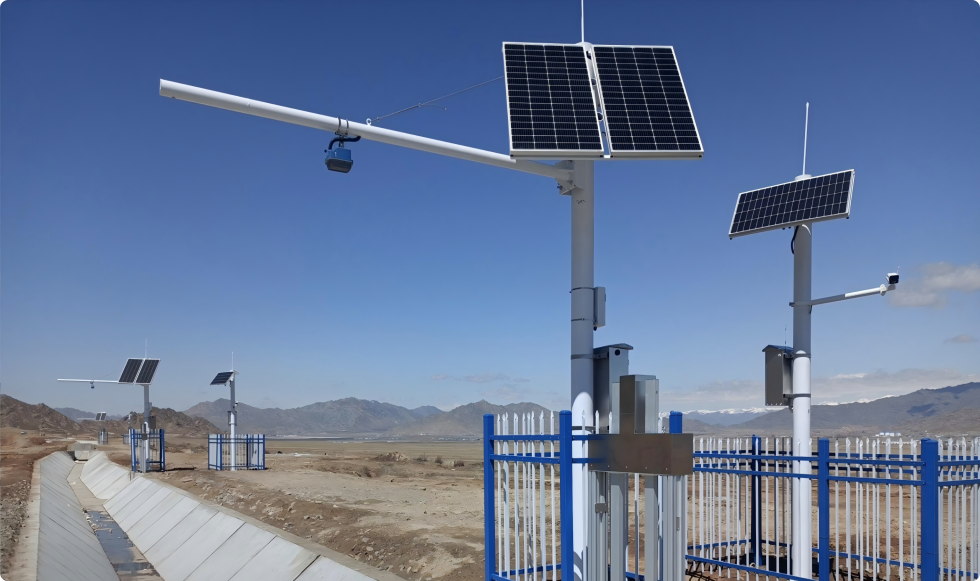
The integrated monitoring and control gate system design encompasses multiple aspects. It includes not only the construction of the gates at the field end but also the uploading of gate information, flow meter measurement data, and video image information to the platform via network layer and BeiDou communication. The platform collects, analyzes, and processes irrigation area data, facilitating comprehensive management of multiple points and water dispatching, truly achieving intelligent water allocation in the irrigation area.
The biggest change brought about by the information technology construction of the integrated monitoring and control gate system is “unmanned operation.” The system can automatically collect measurement data from external sensor devices and intelligently control the gate opening based on built-in control logic to achieve automatic control of water level and flow. The system can wirelessly transmit local status, sensor measurement data, and gate status video data to a remote server. Combined with the company’s supporting mobile APP and WEB platform, it enables real-time monitoring of the gate control system, achieving unmanned operation.
System Architecture
The integrated measurement and control gate system refers to a hardware and software system that highly integrates measurement and control functions, utilizing various advanced technologies to achieve real-time monitoring and precise control of gate-related parameters. This system features remote control, video monitoring, anomaly alarms, voice broadcasting, and multiple automatic control modes, avoiding water waste in traditional irrigation and providing strong technical support for the modernization of agriculture. It mainly consists of five parts: the integrated measurement and control gate, water measurement facilities, video monitoring, communication network, and software platform.
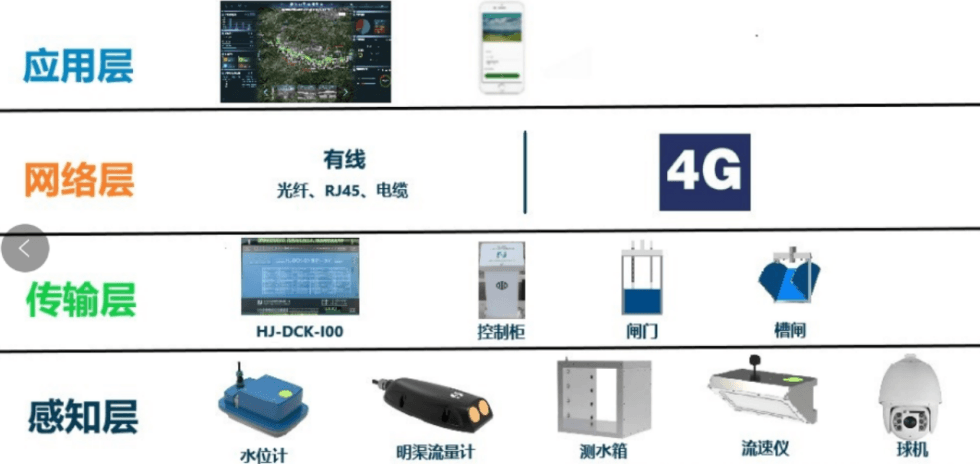
System Architecture
The integrated measurement and control gate system refers to a hardware and software system that highly integrates measurement and control functions, utilizing various advanced technologies to achieve real-time monitoring and precise control of gate-related parameters. This system features remote control, video monitoring, anomaly alarms, voice broadcasting, and multiple automatic control modes, avoiding water waste in traditional irrigation and providing strong technical support for the modernization of agriculture. It mainly consists of five parts: the integrated measurement and control gate, water measurement facilities, video monitoring, communication network, and software platform.
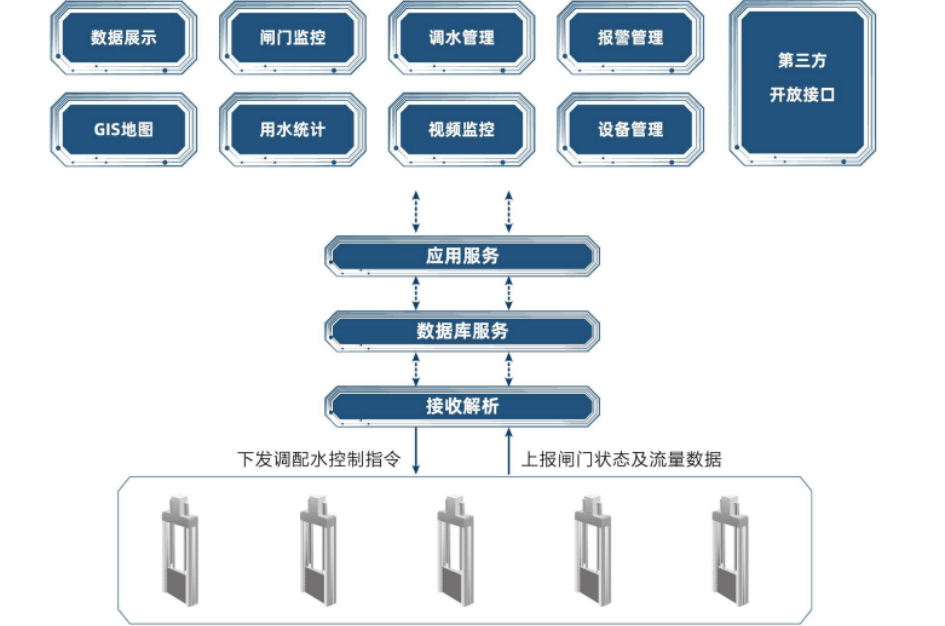
Solution Highlights
Key Deliverables
01.
Integrated Gate Unit
Functional Capabilities
Structure & Components
Includes gate body, smart controller (HJ-DCK series), AC/DC power supply system, sensor cluster, and drive assembly.
02.
Flow Measurement Facilities
| Parameters | Technology / Sensor | Key Specifications |
| Section Average Velocity | Transit-time ultrasonic flow box | 8–32 measurement layers; Velocity range: ±0.01 to ±5 m/s; Velocity accuracy: ±2.5%; Water level range: 0–15 m (Accuracy: ±2 mm); IP68. |
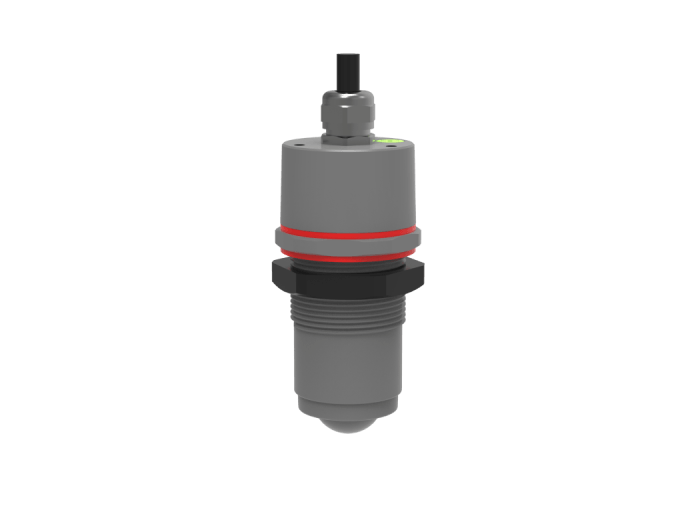
| Hydraulic Structure Method | Upstream & downstream radar level meters | Radar frequency: 80 GHz; Range: 40 m; Accuracy: ±2 mm; Beam angle: 8°; Power supply: 7–32 VDC. |
| Downstream Flume/Weir | Parshall flume / Triangular / Rectangular weir + Radar level sensor | Radar frequency: 60 GHz; Range: 2.5 m; Accuracy: ±2 mm; Beam angle: 6°; Ultra-low power consumption. |
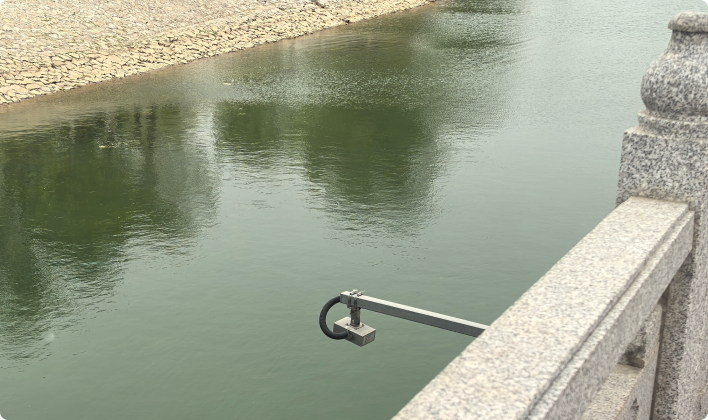
| Surface Velocity Method | Non-contact Radar Flowmeter (Velocity + Water Level) | 24 GHz velocity radar (0.03–20 m/s, ±2% FS) + 80 GHz water level radar (40 m range, ±3 mm accuracy); Built-in hydraulic algorithm model. |
| Doppler Flowmeter | Submerged contact Doppler sensor | Velocity range: +0.01 to ±5 m/s (Accuracy: ±0.5% FS); Water level range: 0–10 m (Accuracy: ±1% FS); Min. water depth: 2.5 cm; IP68. |
03.
Video Surveillance
Features low-power, wide-voltage PTZ cameras optimized for off-grid outdoor operations.
04.
Networking & Communications
Uses a C/S gateway architecture to handle data reception, protocol parsing, and storage across multi-source networks (4G/5G, Beidou Satellite, SMS, TCP/UDP).
05.
Software Platform
Gate Types
01.
Dual-Hoist Aluminum Alloy Gate
Designed for small/medium branch canals without requiring concrete gate houses.
02.
Screw-Rod Aluminum Alloy Gate
03.